

A Quality Certification Guide for Dog Chew Importers helps you understand the exact documents, test reports, and approvals required to import dog chews safely and compliantly. From quality certifications to regulatory paperwork, this Quality Certification Guide for Dog Chew Importers ensures you know what to expect from manufacturers, avoid shipment rejections, and protect your brand in global markets.
Key Takeaways
- Health certificates affirm your dog chew products as safe and healthy for pets.
- Import permits vary from country to country but are usually necessary.
- Microbial testing for Salmonella, E. coli is a requirement (can be provided for a fee).
- Appropriate labeling in indigenous languages with use directions and warnings is required.
- Knowledge of country-specific regulations avoids shipment delay or rejection.
- It is made simpler by using licensed customs brokers and accredited laboratories.
Introduction
When you import dog chews, quality certification isn’t just paperwork—it’s your ticket to smooth customs clearance and happy customers. Different countries have their own rules to keep pets safe and prevent disease spread. Understanding these rules and the documents you need makes your job easier and your shipments faster.
What Documentation Should Dog Chew Importers Expect?

Key Documents and Certifications Across Markets
When you import dog chews, expect these core documents:
- Health Certificates: Official proof from the country where the chews are made, confirming they’re safe for dogs.
- Import Permits: Many countries require you to apply for permission before shipping.
- Microbiological Test Reports: Certificates of Analysis (CoA) showing tests for bacteria like Salmonella and E. coli.
- Labeling Compliance: Labels must list ingredients, batch numbers” and include warnings like “Not for human consumption.”
- Facility Registrations: Some countries want to see where the chews were made and that the factory meets safety standards.
Common Importer Questions
Do I need a special permit?
Usually, yes. Especially if your dog chews contain animal parts. Since Lekali dog chews do not have any animal ingredients, you do not need a special permit.
Can I use the same documents for every country?
Not really. Each country has unique rules, but health certificates and microbial tests are almost always needed.
Country-Specific Documentation and Certification Requirements
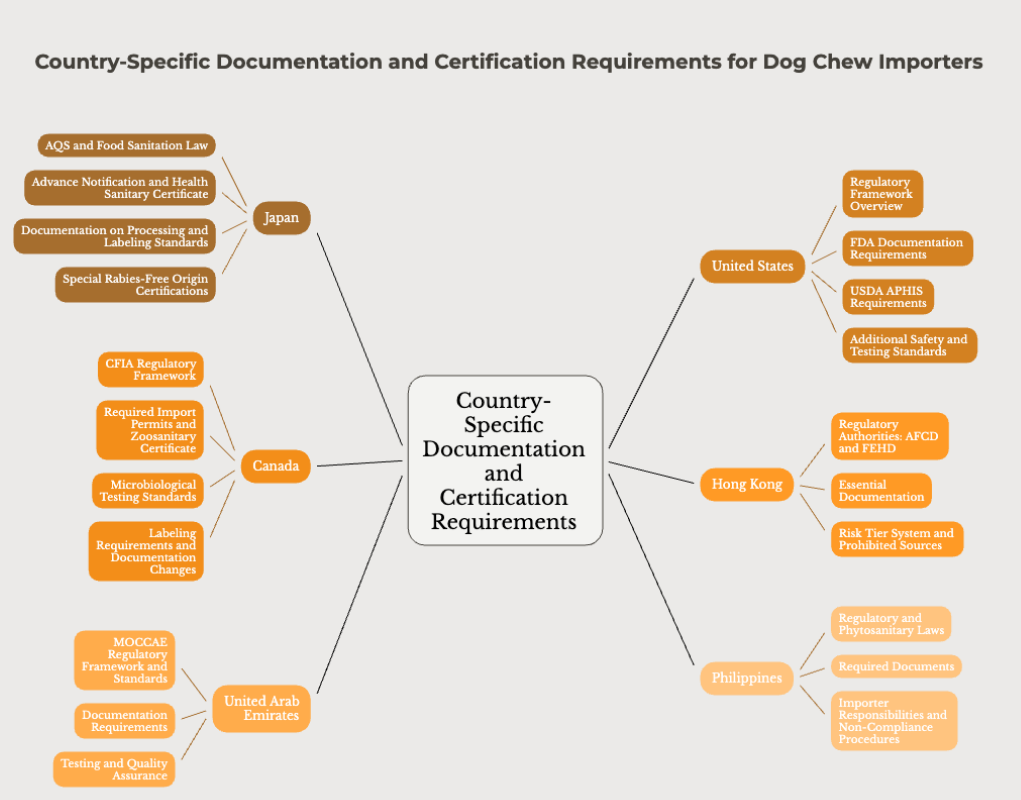
Let’s look at what you need for some key markets.
United States
1. Regulatory Framework Overview
The FDA and USDA APHIS share responsibility. The FDA ensures pet food is safe and properly labeled. USDA APHIS controls imports of animal-origin materials to prevent diseases like rabies.
2. FDA Documentation Requirements
- Prior Notice & Facility Registration: You must register your facility and notify the FDA before shipping, under the Bioterrorism Act.
- Foreign Supplier Verification Program (FSVP): Importers must verify suppliers meet U.S. safety standards.
- Product Listing: Your dog chews must be listed with the FDA.
3. USDA APHIS Requirements
- Permits: Needed if your chews contain animal-origin ingredients, especially from rabies-affected countries. Apply via APHIS eFile.
- Health Certificates: Must come from the exporting country’s veterinary authority.
- Customs Entry and Labeling: File customs forms within 5 working days of arrival. Labels must follow 21 CFR Part 501 rules, listing ingredients, net weight, and manufacturer info.
4. Additional Safety and Testing Standards
- HACCP and ISO certifications may be required or beneficial to prove product safety and quality.
- Testing for contaminants, heavy metals, and pathogens is common.
Example: If you import Himalayan Yak chews, you’ll want to check their FDA registration and ensure your labels say “Not for human consumption.” Learn more about how to import yak chews into the US.
Canada
1. CFIA Regulatory Framework
The Canadian Food Inspection Agency (CFIA) oversees pet food imports. In 2025, they updated protocols to streamline imports but keep strict safety checks.
2. Required Import Permits and Zoosanitary Certificate
- You need a CFIA import permit after a risk assessment.
- A Zoosanitary Export Certificate from Nepal’s veterinary authority confirms disease-free production and heat treatment.
3. Microbiological Testing Standards
- Five random samples per shipment are tested for Salmonella and other pathogens.
- Packaging must be sealed and labeled with ingredients, origin, and batch codes.
4. Labeling Requirements and Documentation Changes
- The “Importer’s Statement of Compliance” was phased out in April 2025.
- Now, shipping documents must reference the zoosanitary certificate.
For detailed info, check how to import Himalayan Yak cow chews into Canada.
Japan
1. Animal Quarantine Service (AQS) and Food Sanitation Law
Japan requires strict quarantine to prevent rabies.
2. Advance Notification and Health Sanitary Certificate
- Notify AQS at least 40 days before arrival.
- Submit a health certificate and test report from the exporting country.
3. Documentation on Processing and Labeling Standards
- Declare processing methods (smoking, drying) on commercial invoices.
- Labels must include product name, ingredients, country of origin, and note that it’s for pet use only.
4. Special Rabies-Free Origin Certifications
- Proof that chews come from rabies-free regions (e.g., Nepal’s high-altitude zones) is needed.
Learn more about importing Himalayan Yak chews into Japan.
Hong Kong
1. Regulatory Authorities: AFCD and FEHD
The Agriculture, Fisheries and Conservation Department (AFCD) and Food and Environmental Hygiene Department (FEHD) regulate imports.
2. Essential Documentation
- Official health certificate confirming fitness for animal consumption.
- Import permit (AF240 Form) from AFCD.
- Quality control documents: batch testing, facility inspections.
3. Risk Tier System and Prohibited Sources
- Countries are grouped by risk; Nepal usually falls in Group IIIB.
- Chews from banned breeds like Pit Bull Terriers are prohibited.
For more details, visit how to import Himalayan Yak cow chews into Hong Kong.
United Arab Emirates
1. MOCCAE Regulatory Framework and Standards
The Ministry of Climate Change and Environment (MOCCAE) controls imports under UAE.S GSO 2142:2011 standards.
2. Documentation Requirements
- MOCCAE import permit valid for 30 days.
- Health and free sale certificates from Nepal.
- Halal certification to confirm no pork or alcohol in processing.
- Bilingual Arabic and English labels with ingredients, nutritional info, production and expiry dates, and “Not for human consumption.”
3. Testing and Quality Assurance
- Tests for contaminants such as heavy metals and aflatoxins are mandatory.
Explore more at importing Himalayan Yak cow chews into the UAE.
Philippines
1. Regulatory and Phytosanitary Laws
The Philippines enforces food safety and phytosanitary rules aligned with ASEAN standards.
2. Required Documents
- Sanitary certificates from the exporting country’s authority.
- Sanitary/phytosanitary (SPS) certificates under ASEAN agreements.
- Goods inspection and documentation review for compliance.
3. Importer Responsibilities and Non-Compliance Procedures
- Importers are responsible for ensuring compliance.
- Non-compliant shipments may be treated or rejected at entry.
Universal Documentation and Best Practices for Dog Chew Importers
Essential Universal Documents
- Certificate of Analysis (CoA): Shows microbial and heavy metal testing results from accredited labs.
- Food Safety Certifications: ISO 22000, HACCP, and SA8000 certifications build buyer confidence.
Accurate and Clear Labeling Guidelines
- Include ingredient lists, usage instructions, batch codes, production and expiry dates.
- Add mandatory statements like “Not for human consumption” where required.
Customs Classification and Reducing Shipment Delays
- Prepare documentation carefully to meet customs rules and avoid extra duties or holds.
- Work with licensed customs brokers who know your market’s rules.
Cost Considerations and Documentation Challenges
- Testing and certification can be costly, especially microbiological and contaminant tests.
- Plan your budget to cover permits, lab fees, and customs brokerage.
- Delays in paperwork can hold shipments for weeks, so prepare early and keep good records.
Conclusion and Action Steps
To sum up: knowing each country’s health certificates, import permits, microbial tests, and labeling rules is essential. Keep detailed records, work with trusted labs and customs experts, and stay updated on regulations. That way, your dog chew imports will be smooth and successful.
If you want to dive deeper into specific markets, check out these helpful resources:


